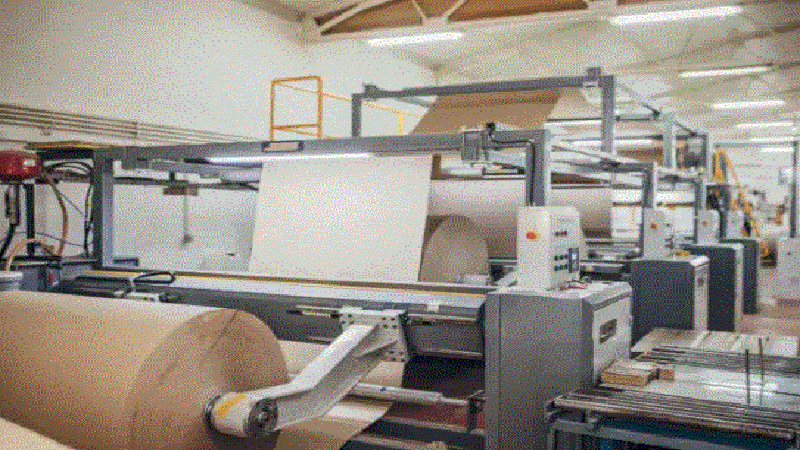
The global transition away from petrochemical-based plastics has triggered an unprecedented surge in demand for sustainable packaging alternatives. Driven by both shifting consumer ethics and tightening international legislation, commercial packaging facilities are under immense pressure to transition toward paper-based operations.
To meet this surging global demand without compromising structural integrity or production speed, manufacturing facilities are rapidly upgrading to next-generation automated production lines.
For instance, industry leaders like KETE Group engineer advanced paper bag-making machines that integrate precision servo-motor technology, allowing packaging manufacturers to maintain high-speed outputs while strictly adhering to eco-friendly manufacturing tolerances.
This shift is no longer just about corporate social responsibility; it is a fundamental requirement for manufacturing survival in a rapidly evolving supply chain landscape.
Key Technological Advancements in Modern Paper Bag Machinery
The leap from traditional mechanical systems to fully automated, digitally controlled machinery represents a paradigm shift in packaging manufacturing. Legacy systems relied heavily on manual adjustments and mechanical gears, which severely limited output consistency.
Today’s modern paper bag machinery relies on a synchronized network of smart sensors and intelligent drives. This allows operators to achieve micro-millimeter accuracy, drastically minimizing material waste and energy consumption across the entire production cycle.
Here is a breakdown of how automated systems outperform legacy equipment on the factory floor:
| Manufacturing Metric | Traditional Semi-Auto Machines | Fully Automated Servo Machines |
| Output per minute | 50 – 150 bags/min | 300 – 800+ bags/min |
| Wastage rate | 3% – 5% | < 1% |
| Labor required | 3 – 4 operators per line | 1 operator per line |
Servo-Motor Precision and High-Speed Output
At the heart of modern paper bag machines is servo-motor technology, which replaces outdated mechanical cams with precise digital motion control.
This digital synchronization ensures that every cutting, folding, and gluing phase is executed with absolute precision, even at peak operating speeds.
By eliminating mechanical drift, servo-driven machines virtually eradicate dimensional errors, ensuring every paper bag meets strict quality assurance standards required by top-tier retail brands.
Inline Printing Capabilities
Another critical advancement is the integration of inline flexo printing (flexography) directly into the bag manufacturing sequence.
Instead of moving plain paper bags to a separate printing facility—which incurs massive logistical costs and downtime—inline systems print, cut, and form the bag in a single continuous pass.
This streamlined workflow significantly reduces time-to-market and allows B2B manufacturers to offer customized, branded packaging solutions at highly competitive price points.
Overcoming Supply Chain Bottlenecks with Automation
Industrial manufacturers are currently facing severe labor shortages and rising operational costs across the globe.
Relying on manual labor for high-volume packaging production creates hazardous bottlenecks, leading to delayed shipments and lost contracts. Fully automated paper bag lines mitigate this risk by requiring minimal human intervention, effectively shielding manufacturers from volatile labor markets.
Furthermore, these intelligent machines often feature predictive maintenance protocols and real-time monitoring interfaces.
Operators can diagnose mechanical inefficiencies before they cause a complete system failure, ensuring uninterrupted continuous operation during peak demand seasons.
Global Regulatory Compliance in Packaging Materials
These machinery upgrades across the supply chain are not merely driven by consumer preference, but by stringent regulatory shifts.
According to recent reports on theglobal push against single-use plastics, manufacturing businesses are under increasing legal pressure to adopt paper alternatives and comply with evolving environmental mandates globally.
Failure to adopt compliant packaging solutions can result in severe financial penalties and the loss of access to major international markets.
By investing in high-precision, low-waste automated machinery, manufacturers can definitively prove their adherence to global sustainability targets and secure their place in the future supply chain.
Key Takeaways
| Area | Key Takeaway | Impact/Data |
| Production | Upgrade to servo-motor machines | Output reaches 300-800+ bags/min |
| Efficiency | Rely on smart sensors | Material waste drops to < 1% |
| Labor | Automate to bypass shortages | Needs only 1 operator/line |
| Workflow | Integrate inline flexo printing | Enables single-pass production & branding |
| Risk | Abandon single-use plastics | Avoids market lockout & penalties |
Conclusion: Future-Proofing the Manufacturing Line
The shift toward sustainable paper packaging is a permanent evolution of the global manufacturing sector.
Transitioning to automated paper bag machinery is a strategic capital investment that immediately yields a higher return on investment (ROI) through labor reduction, minimized material waste, and vastly superior output speeds.
As environmental regulations continue to tighten, facilities equipped with agile, high-speed automated systems will hold a definitive competitive advantage. Embracing this technology today is the most reliable strategy for future-proofing industrial packaging operations.
See More:thelaptopadviser.org