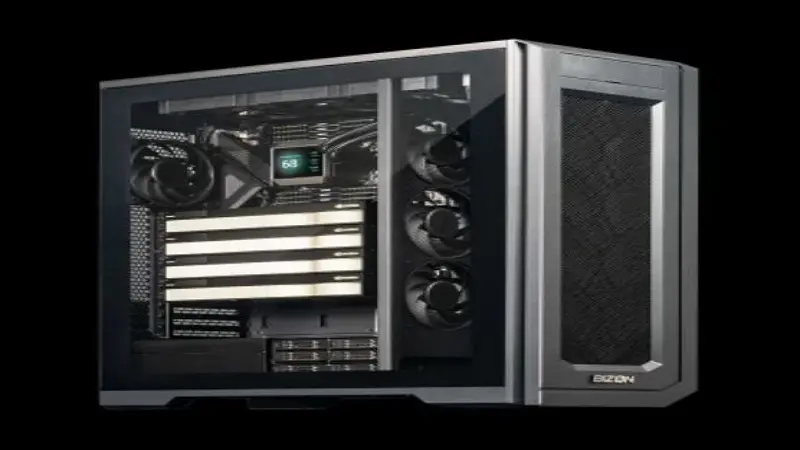
Game development has seen tremendous changes in the past few years. In comparison to previous limitations, developers are no longer bound to specific hardware that could determine such factors as graphics quality, the size of the world within the game, and so on. It has become possible to produce extremely high-quality products that were impossible on previous platforms.
These opportunities and the necessary hardware needs arise from a significant change in technology used for modern games. Intelligent optimizations used in engines allow them to operate at extremely high efficiency, ensuring impressive performance in terms of both quality and computing capacity.
Knowing how it is possible to overcome the previously existing performance problems can help make better choices regarding software and hardware.
Why Traditional Performance Limits No Longer Define Modern Games
Game development once depended heavily on raw CPU and GPU power. As projects became larger, developers often faced strict limitations related to rendering speed, memory usage, and storage performance.
Nowadays, there are very sophisticated development environments available, like the Unreal Engine workstation standard edition environment, which allows developers to use new render technologies to develop bigger worlds and more intricate scenes efficiently.
As opposed to making hardware work under full capacity on everything rendered by constantly working on all assets at their full quality, today’s engines wisely manage all processes.
AI Upscaling Changes the Rendering Equation
One of the biggest innovations in game development is artificial intelligence upscaling. Instead of rendering each frame in its native high resolution, game developers can downscale their rendering process and then upscale frames using smart reconstruction technologies that create crisp and clear pictures.
Smart reconstruction technologies like NVIDIA DLSS and AMD FSR greatly minimize the GPU processing load. Consequently, developers manage to deliver higher FPS with picture quality close to that of the native resolution.
In other words, this technology helps optimize the performance of games on different hardware setups.
Frame Generation Creates Smoother Experiences
The traditional technique is solely based on hardware frames. With modern games, the technique has developed to a point where the use of frames is enhanced by the creation of new AI-based frames within the traditionally rendered frames.
The result of such a process is a smoother and more responsive experience, especially for graphically intensive environments. Instead of upgrading hardware equipment, the creation of new frames increases the lifespan of old machines.
Mesh Shaders Reduce CPU Bottlenecks
Older rendering pipelines required the CPU to process enormous amounts of geometry data before sending it to the graphics card. This often created performance bottlenecks in complex environments.
Modern mesh shader technology changes this approach by allowing the GPU to manage geometry more efficiently. Only visible details are processed, while unnecessary calculations are eliminated.
This innovation allows developers to build highly detailed environments containing millions of polygons without overwhelming system resources or reducing frame rates.
DirectStorage Accelerates Asset Delivery
Loading large game worlds traditionally placed heavy demands on processors and storage systems. Long loading screens became common as assets were transferred and decompressed.
DirectStorage introduces a more efficient method by allowing assets to move directly from fast NVMe drives to graphics memory. This dramatically reduces loading times and improves streaming performance.
Large environments can now load seamlessly while players move through the world, creating more immersive gameplay experiences and eliminating many traditional storage bottlenecks.
The Growing Importance of Modern Workstations
As development technologies become more advanced, workstation requirements continue to increase. AI tools, advanced rendering pipelines, virtual production workflows, and massive asset libraries all demand reliable hardware.
Teams working with complex projects often benefit from solutions such as an Unreal Engine professional edition workstation, which can support large-scale environments, advanced lighting systems, and intensive development workloads.
Modern workstations help reduce build times, improve viewport responsiveness, and maintain stable performance during long development sessions.
Balancing Visual Quality and Performance
Although modern technologies help overcome many hardware limitations, optimization remains critical. Developers must carefully balance visual quality with system requirements.
Features such as AI upscaling, dynamic geometry management, and intelligent asset streaming are powerful tools, but they work best when integrated into a well-optimized project. Poor implementation can still result in performance issues, stuttering, or excessive hardware demands.
Successful development teams focus on creating efficient workflows that combine advanced technologies with practical optimization strategies.
Building for the Future of Interactive Experiences
The future of game development still looks to involve larger maps, real-time ray tracing, procedural world building, and other AI-enhanced methods. This progress is likely to raise hardware demands but also provide innovative possibilities at the same time.
Game studios willing to invest in scalable technology infrastructure now would be better positioned to use upcoming innovations in the future. The more flexible the system, the less challenging the integration of innovative technologies would become.
Adaptability becomes almost as important as computational power in contemporary development processes.
Choosing Hardware That Supports Long-Term Growth
Game development hardware solutions come from various manufacturers such as Puget Systems and BOXX Technologies. They provide powerful workstations that can be used for developing and designing in a professional manner.
Nevertheless, Cloud Ninjas has distinguished itself with its application-specific workstation solution that caters to the practical needs of the developer. As opposed to providing generalized hardware, Cloud Ninjas provides solutions that cater specifically to developers’ needs.
With game development technology constantly moving beyond what is traditionally achievable on a PC, having specialized hardware could make a difference in staying productive and efficient.