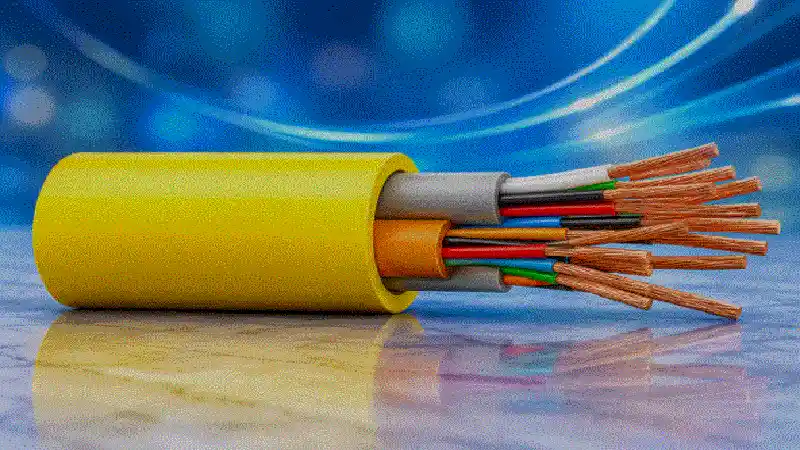
Selecting appropriate electronics wire and cabling for industrial applications requires careful analysis of multiple technical factors that directly impact system performance and safety. Engineers must balance electrical specifications with environmental challenges, including extreme temperatures, chemical exposure, and electromagnetic interference. The wrong choice can lead to equipment failure, production downtime, and safety hazards. Understanding the relationship between conductor materials, insulation types, and operating conditions forms the foundation for making informed decisions that guarantee reliable long-term operation in demanding industrial settings.
Assessing Electrical Requirements and Operating Conditions in Industrial Environments
Before selecting appropriate wire and cabling for industrial applications, engineers must conduct a thorough analysis of the electrical load characteristics and environmental factors that will affect system performance. Critical parameters include voltage ratings, current-carrying capacity, and frequency requirements specific to the equipment being powered.
Temperature extremes, chemical exposure, moisture levels, and mechanical stress must be evaluated to determine appropriate insulation materials and protective sheathing. Industrial settings often present harsh conditions such as oil contamination, abrasion from moving machinery, and electromagnetic interference. Engineers should document ambient temperature ranges, potential exposure to corrosive substances, and UV radiation levels.
Understanding whether cables will experience continuous flexing or remain stationary influences conductor strand configuration and jacket durability requirements. This extensive assessment guarantees wire selection meets both electrical specifications and environmental demands.
Choosing Electronics Wire and Cabling Based on Voltage, Current, and Signal Needs
Once environmental parameters have been established, engineers must match wire specifications to the electrical characteristics of the system. Voltage ratings determine insulation thickness and material composition, with higher voltages requiring enhanced dielectric strength to prevent breakdown. Current capacity dictates conductor gauge, as inadequate sizing causes excessive heat generation and voltage drop across cable lengths.
Signal transmission applications demand specialized considerations beyond power delivery. Low-voltage control signals require shielded cables to minimize electromagnetic interference, while high-frequency data transmission necessitates precise impedance matching and twisted-pair configurations.
Analog signals benefit from individually shielded conductors to prevent crosstalk between adjacent circuits. Wire ampacity calculations must account for ambient temperature, bundling factors, and duty cycles. Engineers should consult ampacity tables and apply appropriate derating factors to guarantee safe, reliable operation within thermal limits.
Comparing Conductor Materials, Wire Gauges, and Insulation Types
Copper and aluminum represent the primary conductor material choices for industrial wiring, each offering distinct advantages in cost, weight, and electrical performance. Copper provides superior conductivity and flexibility, making it ideal for demanding applications requiring minimal voltage drop.
Aluminum offers significant weight reduction and lower material costs, though requiring larger wire gauges to match copper’s current-carrying capacity. Wire gauge selection depends on current load, ambient temperature, and allowable voltage drop. American Wire Gauge (AWG) standards specify conductor diameter, with smaller numbers indicating thicker wires capable of handling higher currents.
Insulation materials must withstand environmental conditions including temperature extremes, chemical exposure, and mechanical stress. Common options include PVC for general applications, XLPE for high-temperature environments, and specialized compounds like silicone or Teflon for harsh industrial conditions.
Selecting Cables That Withstand Heat, Moisture, Chemicals, and Mechanical Stress
Industrial environments subject cables to multiple stressors simultaneously, requiring thorough assessment of thermal, moisture, chemical, and mechanical challenges before specification. Temperature ratings must exceed maximum operating conditions, with thermoplastic insulation suitable for moderate heat and thermoset materials like silicone or PTFE necessary for extreme temperatures.
Moisture resistance demands appropriate jacket materials, PVC for light exposure, polyurethane or chlorinated polyethylene for persistent dampness. Chemical compatibility requires matching insulation and jacket materials to specific substances present. Consult manufacturer chemical resistance charts to verify compatibility with oils, solvents, acids, or bases encountered.
Mechanical stress considerations include abrasion resistance, requiring reinforced jackets or armor; flexibility for moving applications, necessitating finely stranded conductors; and tensile strength for installations with pulling forces or weight-bearing requirements. Multi-layer constructions often address multiple stressors effectively.
Preventing Electromagnetic Interference With Proper Shielding and Cable Design
Beyond environmental durability, electronic cables in industrial settings must maintain signal integrity in the presence of electromagnetic interference (EMI). Industrial environments contain motors, variable frequency drives, and switching equipment that generate electromagnetic noise capable of corrupting data transmission and control signals.
Shielded cables provide the primary defense against EMI. Braided shields offer excellent flexibility and coverage, while foil shields deliver complete wrap-around protection at lower cost. For severe interference, combining both creates superior performance.
Twisted pair construction further reduces susceptibility by canceling induced noise through geometric symmetry. The twist rate directly affects rejection capability; tighter twists provide better immunity.
Proper grounding practices guarantee shield effectiveness. Connecting shields at one end prevents ground loops, while both-end grounding suits high-frequency applications. Cable routing away from interference sources and maintaining separation from power lines minimize exposure.
Evaluating Safety Standards, Certifications, and Installation Requirements
Regulatory compliance forms the foundation of safe industrial cable installations, as electrical systems must meet established codes to protect personnel and equipment. NEC (National Electrical Code), UL (Underwriters Laboratories), and CSA (Canadian Standards Association) certifications verify that cables withstand voltage, temperature, and environmental conditions specific to industrial settings.
Installation requirements vary by application zone. Hazardous locations demand explosion-proof cables with appropriate ratings for Class, Division, and Group classifications. Cables must also satisfy fire safety standards, including flame propagation limits and smoke generation ratings for enclosed spaces.
Proper cable sizing follows ampacity tables that account for conductor temperature ratings, ambient conditions, and derating factors. Installers must observe bend radius specifications, support spacing, and segregation requirements between power and signal cables to maintain system integrity and warranty coverage.
Balancing Cost, Durability, and Long-Term Reliability in Industrial Cable Selection
Meeting compliance standards establishes baseline cable specifications, yet procurement decisions must weigh initial investment against operational lifespan and maintenance costs.
Premium cables with superior insulation materials and construction tolerances command higher prices but deliver extended service life in demanding environments. Total cost of ownership calculations should include installation labor, downtime expenses, and replacement frequency rather than focusing solely on purchase price.
Durability factors such as abrasion resistance, chemical compatibility, and temperature ratings directly impact cable longevity. Industrial facilities with harsh conditions benefit from ruggedized cables that withstand mechanical stress and environmental exposure.
Reliability metrics include mean time between failures, conductor quality, and manufacturer warranty terms. Strategic cable selection balances upfront expenditure with reduced maintenance intervals and operational continuity, optimizing long-term value for industrial applications.
See More: thelaptopadviser.org