The intersection of computing hardware and industrial machinery has transformed how modern factories operate. Today’s production lines are no longer just mechanical systems; they are highly sophisticated networks driven by complex data processing. Understanding the hardware that powers these systems is essential for engineers and operations managers alike.
In this landscape, Programmable Logic Controllers (PLCs) and advanced sensor arrays act as the nervous system of the factory floor. They ensure that heavy machinery operates with the precision of a high-end computing device.
This article explores the fundamental hardware principles, sensor integration loops, and computing specifications that make automated manufacturing both fast and reliable.
The Convergence of Edge Computing and Physical Packaging Automation
The modern factory relies heavily on decentralized computing power to manage complex tasks. Edge Computing brings processing capabilities directly to the shop floor, reducing the physical distance data must travel. This local computer architecture is essential for minimizing latency.
At the core of this localized control are Edge PCs, PLC Integration, and specialized industrial microcontrollers. Unlike cloud-based servers, these local compute units are designed to interface directly with physical machinery. They translate raw sensor data into actionable mechanical movements instantly.
Latency is the enemy of high-speed manufacturing. When a machine processes thousands of units per hour, compute hardware must handle sensor inputs in mere milliseconds. Even a fractional delay in data processing can cause mechanical misalignment, leading to product damage or catastrophic machine failure.
- Edge PCs handle complex data logging and visual interface management.
- Microcontrollers execute specific, low-level tasks with near-zero latency.
- PLCs serve as the central brain, bridging high-level software with physical actuators.
Sensor Calibration and Servo Integration in High-Precision Machinery
To achieve microscopic precision, industrial machines require constant, uninterrupted data streams from their environment. This is where advanced sensor hardware and motorized actuators work in tandem. Closed-Loop Feedback systems allow machinery to constantly self-correct based on real-time data inputs.
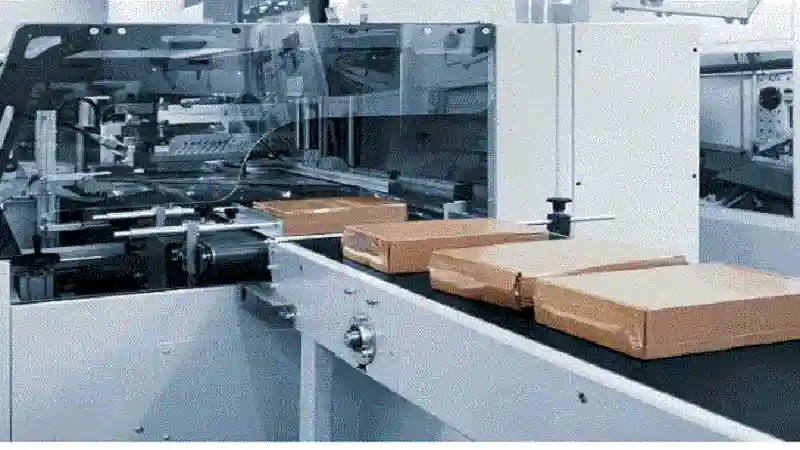
Modern automated packaging systems rely heavily on this closed-loop sensor feedback to maintain positional accuracy under heavy workloads. For instance, engineering benchmarks from specialized machinery manufacturers like Levapack‘s automated packaging systems demonstrate how integrating precision servo motors with real-time positional sensors minimizes mechanical friction. This setup allows for automatic malposition correction without halting the line.
The hardware ecosystem driving this precision includes several specialized components:
- Rotary Encoders: Track the exact angle and rotational speed of moving parts.
- Photoelectric Sensors: Use light beams to detect the presence, absence, or alignment of products.
- Servo Control Systems: Translate electrical signals into exact mechanical positioning.
Hardware protection systems are equally vital for maintaining operational uptime. Automated Overload Trip Sensors constantly monitor electrical current and mechanical resistance. If a jam occurs, these sensors instantly cut power to the servo motors, preventing the machinery from tearing itself apart.
Hardware Specifications: Standard PCs vs. Industrial Control Hardware
While a consumer-grade laptop and an industrial controller both process data, their physical architectures are worlds apart. Industrial Control Hardware is engineered to survive environments that would destroy standard commercial silicon in minutes. The primary differentiator is environmental resilience.
Thermal thresholds represent a massive divide between the two categories. Standard PCs rely on active cooling fans that draw in dust and debris. In contrast, industrial hardware often utilizes fanless, passive cooling designs.
Vibration resistance is another critical specification. Manufacturing floors generate constant, low-frequency vibrations that easily dislodge standard RAM modules or conventional hard drives. Industrial hardware uses soldered components and solid-state storage to guarantee stability.
Furthermore, industrial controllers are built for 24/7 Duty Cycles. They are expected to run continuously for years without rebooting.
- IP Ratings: Industrial hardware requires strict Ingress Protection (e.g., IP65 or IP67) against water and dust.
- Chassis Materials: Solid stainless steel enclosures are favored over the aluminum chassis typical of consumer tech, allowing for harsh chemical washdowns.
- Component Lifespan: Capacitors and regulators are rated for extreme endurance, far exceeding commercial benchmarks.
Key Takeaways
| Area | Key Takeaway | Impact/Data |
| Computing | Deploy local PLCs | Cut ms latency |
| Precision | Sync servos & loops | Auto-correct parts |
| Hardware | Buy fanless IP67 | Enable 24/7 uptime |
| Networks | Adopt IEC 61131 std | Zero packet loss |
Communication Protocols and Standards for Smart Manufacturing
The most advanced sensors and processors are useless if they cannot communicate effectively. Smart Manufacturing relies on robust, standardized protocols to transmit diagnostic data from individual machine nodes to supervisory control systems.
Unlike standard office Wi-Fi, industrial communication protocols prioritize determinism—the guarantee that a message will arrive within a specific, predictable timeframe. Industrial Ethernet, Modbus, and CAN bus are the foundational languages of the factory floor.
Ensuring seamless data transfer across distributed sensors requires strict adherence to standardized industrial communications. As documented in comprehensive references on Industrial Ethernet protocols on Wikipedia, real-time determinism is essential. This synchronization prevents packet loss in noisy electromagnetic environments, ensuring high-speed actuators operate precisely.
Compliance with international safety certifications is also non-negotiable. Standards such as IEC 61131 for programmable controllers ensure that hardware from different manufacturers can integrate safely. These protocols safeguard operational integrity, ensuring that a sensor failure triggers a safe shutdown rather than an unpredictable mechanical reaction.
See More: thelaptopadviser.org