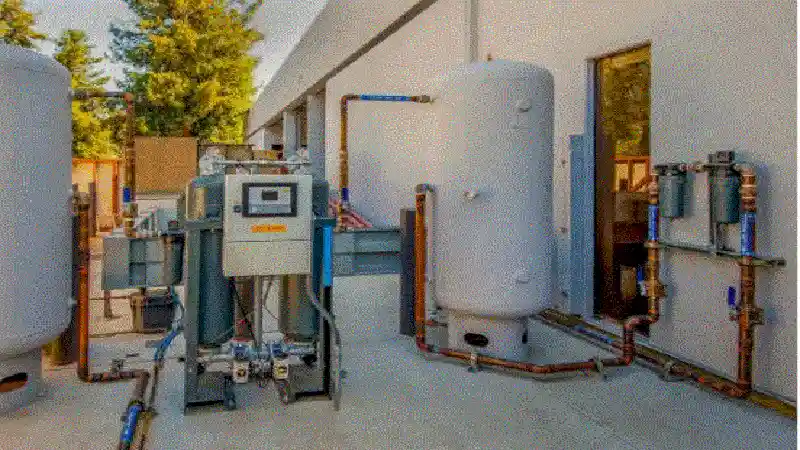
Modern heavy industries, including steel manufacturing, pulp and paper processing, and wastewater treatment, are experiencing a massive surge in demand for on-site oxygen generation. Relying on delivered liquid oxygen is becoming increasingly impractical due to supply chain vulnerabilities and prohibitive transportation costs. As a result, facilities are transitioning to localized generation to secure a continuous, on-demand gas supply.
However, on-site generation introduces a critical operational pain point: extremely high energy consumption. Operating these plants accounts for a significant portion of a facility’s total energy expenditure. For plant managers and gas separation engineers, reducing operational expenditure (OPEX) without compromising gas purity or yield is the ultimate engineering challenge.
The operational cost of on-site oxygen plants is overwhelmingly dictated by the efficiency of the gas separation process. At the core of this process is the adsorbent material. Recent innovations in materials science, particularly the development of high-performance molecular sieves by specialized manufacturers like Jalon, have enabled systems to achieve superior nitrogen adsorption capacities at lower working pressures. By upgrading the core sieve bed, industrial facilities can significantly reduce the power consumed per cubic meter of oxygen produced.
The Mechanics: PSA vs. VPSA Systems
Understanding how to optimize yield begins with distinguishing the mechanical workflows of the two dominant gas separation technologies. Both rely on cyclic adsorption, but their pressure dynamics differ significantly.
| Technology | Operating Pressure | Desorption Method | Typical Purity | Best For (Scale) |
| PSA (Pressure Swing Adsorption) | 4 – 7 bar (g) | Atmospheric Depressurization | 90% – 95% | Small to Medium (Medical, Light Industry) |
| VPSA (Vacuum Pressure Swing Adsorption) | 1.1 – 1.5 bar (g) | Vacuum Pump Extraction | 90% – 93% | Large Scale (Steel, Glass, Heavy Industry) |
Pressure Swing Adsorption (PSA)
Pressure Swing Adsorption (PSA) systems operate by driving ambient air through a vessel packed with molecular sieves under positive pressure. The adsorbent material preferentially traps nitrogen molecules, allowing high-purity oxygen to pass through as the product gas.
Once the sieve bed is saturated with nitrogen, the system depressurizes back to atmospheric pressure. This pressure drop triggers desorption, releasing the trapped nitrogen so the bed can be reused. Because it relies on higher pressures (typically 4-7 bar), PSA requires robust air compressors. It remains the ideal choice for small-to-medium volume requirements, such as medical facilities or light manufacturing, where capital expenditure (CAPEX) limits override the need for absolute lowest energy consumption.
Vacuum Pressure Swing Adsorption (VPSA)
Vacuum Pressure Swing Adsorption (VPSA) represents a leap in energy efficiency for heavy industries. While the adsorption phase still operates under positive pressure, it is at a much lower threshold—often just slightly above atmospheric pressure (1.1 to 1.5 bar).
The core distinction lies in the regeneration phase. Instead of simply venting to the atmosphere, VPSA systems utilize a vacuum pump to actively pull nitrogen out of the molecular sieve bed. This forced desorption cleans the sieve more thoroughly and prepares it for a highly efficient subsequent cycle. Consequently, VPSA drastically lowers the electrical load required per ton of oxygen, making it the superior choice for massive industrial applications where OPEX is the dominant financial metric.
Key Strategies to Lower OPEX in Oxygen Plants
Upgrading to High-Performance Molecular Sieves
The chemical kinetics of the adsorbent directly govern the system’s efficiency limit. Standard zeolite configurations often require higher pressures to achieve adequate gas separation.
- Lithium-Based Molecular Sieves: Upgrading to advanced Li-based sieves drastically improves the nitrogen-to-oxygen (N₂/O₂) selectivity.
- Faster Mass Transfer Zones: These advanced materials facilitate faster adsorption and desorption rates. This allows engineers to shorten cycle times, effectively producing more oxygen with a smaller volume of adsorbent material.
- Lower Operating Pressures: Because the sieve is highly selective, the system does not need to force air at maximum pressure, directly translating to lowered compressor workload and reduced electrical draw.
Optimizing Compressor and Vacuum Pump Dynamics
Compressors and vacuum pumps represent the lion’s share of energy consumption in any gas separation plant. Operating them at a fixed, constant speed is a massive waste of baseline power.
- Variable Frequency Drives (VFDs): Integrating VFDs allows the motors driving compressors and vacuum pumps to adjust their speed precisely to the real-time load requirements of the cycle.
- Rapid Valve Actuation: The synchronization between the compressor’s output and the opening of flow valves is critical. Upgrading to ultra-fast pneumatic or electric control valves reduces pressure spikes and minimizes wasted compressed air during bed changeovers.
- Predictive Maintenance: Monitoring vibration and thermal signatures on rotating equipment prevents efficiency losses caused by worn bearings or degraded pump seals.
Implementing Advanced Process Control (APC)
Modern oxygen generation can no longer rely on static operational parameters. Environmental variables, such as ambient temperature and humidity, change the density and moisture content of the intake air.
- Dynamic Cycle Timing: An Advanced Process Control (APC) system continuously monitors the purity of the output gas and automatically adjusts the adsorption and desorption cycle times.
- Real-Time Purity Feedback: If the plant only requires 90% purity for a specific metallurgical process, the APC prevents the system from overworking to achieve 93%, saving substantial energy.
- Automated Turndown Capabilities: During periods of low plant production, the APC safely scales down the oxygen output by pacing the system, avoiding the severe energy penalties of running a large plant at partial load.
Future Trends in Industrial Gas Separation
The trajectory of gas separation technology is heavily skewed toward sustainability and footprint reduction. Manufacturers are aggressively pursuing modular VPSA designs. These skid-mounted systems require a fraction of the traditional installation space, drastically cutting down structural CAPEX while offering plug-and-play scalability.
Furthermore, as global industrial sectors face increasingly stringent emissions regulations, improving the energy efficiency of fundamental processes like gas separation is no longer optional. According to industrial energy efficiency benchmarks set by the International Energy Agency (IEA), optimizing motor-driven systems (which power the compressors and vacuum pumps in VPSA plants) can yield up to a 20% reduction in overall energy consumption, directly contributing to corporate sustainability goals. The integration of renewable energy grids directly into these optimized, motor-driven VPSA plants represents the next frontier in zero-carbon industrial gas production.
Conclusion
Maximizing yield and minimizing energy consumption in on-site oxygen generation is a multifaceted engineering challenge. It cannot be solved by simply purchasing a larger compressor or running longer cycles.
True efficiency is achieved through synergy. The combination of high-grade core adsorption materials with precision fluid control and automated motor optimization is the only viable path forward. By understanding the mechanical realities of PSA and VPSA systems, and investing in advanced molecular sieves and VFD technology, industrial operators can drastically cut their OPEX, secure their gas supply, and future-proof their facilities against rising global energy costs.
See More: thelaptopadviser.org