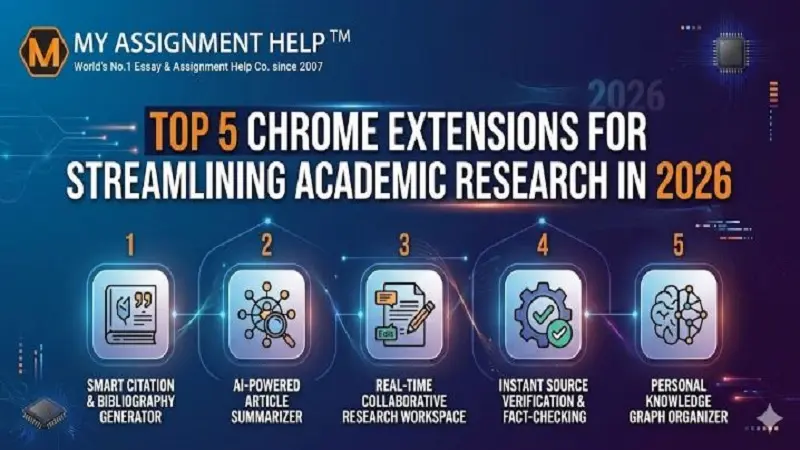
The academic landscape in 2026 is defined by an unprecedented influx of information. With global research output growing at a staggering rate, scholars and students are no longer struggling with a lack of data, but rather with the cognitive load of filtering and validating it. Efficiency is the new currency of the digital campus, making the browser a sophisticated research laboratory.
Streamlining this workflow requires tools that move beyond simple bookmarking. Today’s researchers need AI-integrated environments that can parse complex PDFs, automate citation management, and provide real-time credibility scores. While specialized software exists, Google Chrome extensions remain the most accessible “micro-tools” for daily academic rigor.
1. ScholarGPT: The AI Synthesis Engine
ScholarGPT has evolved into a specialized “Academic Intelligence” layer. Unlike general-purpose AI, this extension is hard-coded to prioritize peer-reviewed databases like JSTOR and PubMed. It allows users to highlight complex technical jargon and receive a simplified explanation based on established field consensus.
For students and professionals who require high-level myassignmenthelp to navigate these complex databases, this tool is a perfect companion. Integrating Research Paper Writing Help with automated synthesis ensures that your literature reviews are both deep and accurate without the traditional time drain.
2. Zotero Connector: Seamless Source Management
Zotero remains a titan due to its open-source nature. In 2026, the Zotero Connector extension has mastered “Auto-Metadata Extraction.” When you land on a journal page, the extension senses the DOI and automatically pulls the full PDF and author details into your library with a single click. This eliminates the manual entry errors that often lead to unintentional plagiarism flags.
3. SciSpace Copilot: Real-time Paper Decoding
Reading a 40-page technical paper can take hours. SciSpace Copilot reduces this time by providing a sidebar that explains mathematics and methodologies in real-time. The 2026 version includes a “Methodology Auditor” that helps students understand the limitations of a study’s design—a key component of critical thinking in higher education.
4. Consensus: The Evidence-Based Search Layer
Consensus is a search engine that uses AI to find answers in scientific research. The Chrome extension brings this power to every search query. If you ask a question in your browser, Consensus highlights the “Scientific Verdict” based on peer-reviewed evidence. In an era of rampant misinformation, this tool ensures your research is grounded in empirical data.
5. Lean Library: The Institutional Access Key
One of the biggest hurdles in academic research is the paywall. Lean Library solves this by automatically detecting your university affiliation. If a paywall pops up, Lean Library redirects you to the licensed version or suggests an Open Access alternative, ensuring you never have to pay for a paper your institution already owns.
Academic standards vary globally, and for those studying in North America, utilizing specialized assignment help canada can provide further localized insights into specific university requirements and formatting standards.
Key Takeaways
- Automate Management:Use Zotero to handle metadata and citations to avoid manual formatting errors.
- Verify Credibility:Use Consensus to ensure your sources align with current scientific consensus.
- Simplify Complexity:SciSpace Copilot is essential for breaking down dense methodologies.
- Bypass Paywalls:Lean Library maximizes your institutional access automatically.
Frequently Asked Questions (FAQ)
Q: Are AI-based extensions considered academic misconduct?
A: When used for synthesis and discovery, these tools are generally accepted. However, using them to generate your actual text without disclosure may violate university policies.
Q: How do I ensure my paper is plagiarism-free when using these tools?
A: Use extensions like Zotero to track your sources meticulously. Ensure that every idea summarized by an AI is traced back to the original author and cited correctly.
Q: Which extension is best for STEM students?
A: SciSpace Copilot is particularly strong for STEM due to its ability to interpret complex formulas and data visualizations.
Author Bio
This article was authored by a Senior Academic Strategist at MyAssignmentHelp. With over a decade of experience in SEO-driven educational content and pedagogical research, our team focuses on empowering students through the intersection of technology and traditional academic excellence.
References & Data Sources
- National Science Foundation (2025).“Global Trends in Peer-Reviewed Literature.”
- Journal of Academic Librarianship (2026).“The Impact of AI Extensions on Student Research Efficiency.”
- Pew Research Center (2025).“Information Overload in Higher Education: A 2026 Perspective. See more