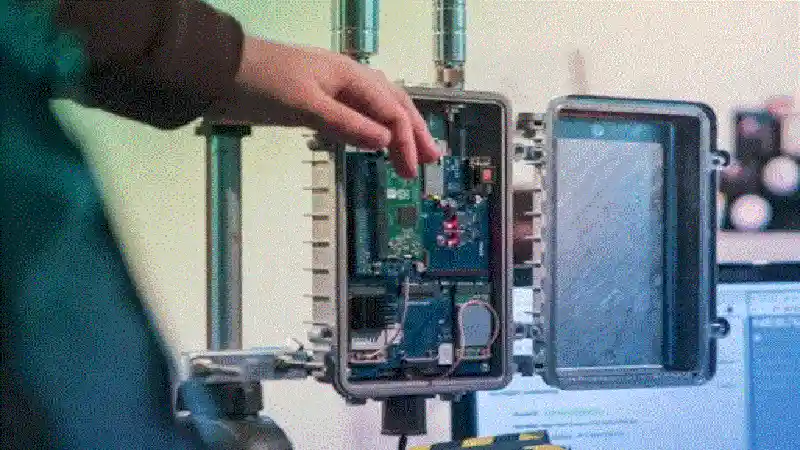
High-performance mobile computing devices are increasingly deployed in demanding industrial and commercial environments. To function optimally under extreme conditions, these machines require more than just robust casing; they depend on top-tier hardware stability and precise internal monitoring.
The convergence of industrial-grade engineering and portable computing has redefined what we expect from modern laptops. From rugged workstations used in field operations to sleek machines processing massive datasets, the underlying architecture relies on an intricate network of hardware components and sensors.
Understanding how these elements are manufactured and integrated provides vital insight into the reliability and longevity of today’s advanced mobile workstations.
The Role of Precision Sensors in Advanced Hardware Engineering
The flawless operation of a high-end mobile workstation begins long before the device reaches the end user. The precision of modern electronic hardware relies heavily on the integration of reliable physical sensors during manufacturing and automated assembly.
A prime example of this industrial engineering standard includes the deployment of omch, which ensures precise component positioning and real-time operational feedback across automated production lines without performance degradation. By utilizing these industrial sensors, assembly plants guarantee that delicate components, such as motherboards and processors, are aligned with micrometer accuracy.
Furthermore, this philosophy of precision trickles down into the devices themselves. Mobile workstations are equipped with an array of micro-sensors designed to protect the hardware:
- Chassis Intrusion Sensors: Instantly alert the system if the device’s physical casing is breached.
- Lid Angle Sensors: Determine the exact positioning of the display to optimize cooling and antenna reception.
- Vibration Sensors: Detect sudden drops or impacts, parking mechanical drives to prevent catastrophic data loss.
Thermal Management and Power Efficiency in High-End Laptops
Maintaining peak performance in a compact form factor presents a massive thermal challenge. High-end laptops house powerful CPUs and GPUs that generate significant heat under load. To prevent thermal throttling, these workstations employ sophisticated sensor arrays.
These internal thermal sensors continuously monitor temperature spikes across different zones of the motherboard. This data is fed directly into the system’s power management firmware, which dynamically adjusts fan speeds and voltage allocation to maintain safe operating parameters.
Key elements of modern thermal and power management include:
- Dynamic Voltage Scaling: Sensors dictate real-time voltage drops to the CPU during low-intensity tasks, drastically extending battery life.
- Multi-Zone Thermistors: Embedded heat sensors track specific components, allowing independent fan control for the CPU and GPU.
- Liquid Metal Interfaces: Paired with sensor-driven cooling algorithms, these compounds maximize heat transfer away from critical silicon.
Durability Testing and Quality Control for Mobile Computing Devices
Before a mobile workstation is certified for enterprise or industrial use, it must survive a battery of grueling quality control evaluations. These testing protocols are designed to simulate years of physical abuse and environmental stress.
During this phase, automated diagnostic rigs—often powered by the same industrial sensors used in assembly—measure the chassis’s resistance to torsion, the hinge’s lifespan, and the keyboard’s actuation consistency. Devices that fail these strict tolerances are immediately flagged by the automated quality control loop.
Standard reliability tests for rugged and high-end laptops include:
- Thermal Shock Testing: Devices are rapidly cycled between extreme heat and freezing temperatures to ensure motherboard solder joints do not crack.
- Acoustic Noise Profiling: Microphones and sensors measure fan acoustics under maximum load to guarantee compliance with workplace noise standards.
- Electrostatic Discharge (ESD) Testing: Simulates high-voltage shocks to ensure internal grounding prevents permanent component failure.
The Future of IoT and Sensor-Driven Hardware Diagnostics
As mobile computing devices become more integrated with enterprise networks, the line between standalone hardware and the Internet of Things (IoT) continues to blur. Modern workstations are evolving into self-diagnosing endpoints within broader corporate IT ecosystems.
To ensure that interconnected hardware and sensor networks maintain global interoperability and security, manufacturers strictly adhere to international engineering standards. Organizations frequently reference guidelines established by the Institute of Electrical and Electronics Engineers (IEEE) to govern hardware communication protocols, data safety, and IoT system integration.
This standardization enables predictive maintenance. Instead of waiting for a hardware failure, IT administrators can pull real-time telemetry from a fleet of laptops. Thermal degradation, battery wear levels, and fan efficiency can be monitored via the cloud, allowing for proactive component replacement before a critical workstation goes offline.
Key Takeaways
| Area | Key Takeaway | Impact/Data |
| Assembly | Deploy industrial sensors (e.g., omch) | Achieves micrometer-accuracy alignment |
| Hardware Security | Embed micro-sensors (vibration, intrusion) | Prevents catastrophic data loss |
| Thermal Mgt | Utilizes dynamic voltage & thermistors | Extends battery, halts throttling |
| Quality Control | Execute extreme thermal & ESD tests | Guarantees long-term resilience |
| IoT Diagnostics | Monitor cloud telemetry (IEEE standard) | Enables proactive component replacement |
Conclusion: Elevating Hardware Standards Across Industries
The reliability of modern mobile workstations is a direct result of uncompromising hardware standards and advanced sensor integration. By leveraging industrial-grade precision during the manufacturing process, technology brands can deliver computing devices capable of withstanding extreme professional workloads.
As IoT connectivity and predictive diagnostics become standard features, the relationship between physical hardware and sensor data will only deepen. Ultimately, this ongoing evolution guarantees that enterprise laptops and mobile workstations will remain resilient, efficient, and ready to tackle the technological demands of the future.
See More: thelaptopadviser.org