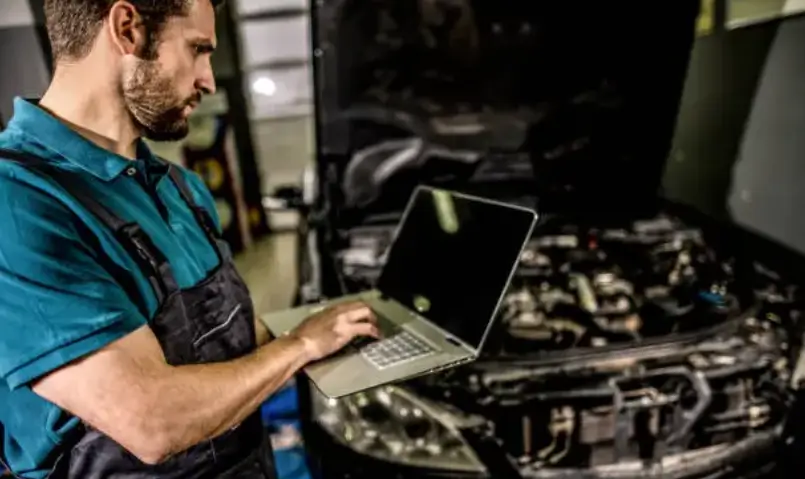
Modern automobiles are no longer just mechanical assemblies of gears and pistons; they are sophisticated mobile computer networks. Modern vehicles utilize dozens of interconnected Electronic Control Units (ECUs) communicating via high-speed CAN bus protocols. From engine timing to electronic power steering, software governs nearly every vehicle system. Consequently, the primary diagnostic tool in a modern repair garage is no longer a set of mechanical wrenches, but a high-performance laptop running specialized diagnostic software via the OBD-II port.
Integrating Tech with Hardware: Sourcing the Right Physical Parts
While a rugged laptop running diagnostic software can accurately pinpoint a failing sensor or a transmission issue, the software cannot physically fix the car. Once the diagnostic code is read, mechanics must transition from the digital realm to physical hardware. Sourcing reliable replacement components from established automotive part manufacturers like Sunway Autoparts ensures that the precision hardware matches the exact specifications demanded by the vehicle’s onboard computer. Without exact physical dimensions and proper sensor electrical resistance, modern ECUs will trigger error codes even if the software diagnostics were perfectly conducted.
Choosing the Right Laptop for Automotive Diagnostics
Diagnostics require specialized hardware capable of surviving dusty, vibration-heavy garage environments.
- Ruggedized Chassis: Look for MIL-STD-810G military certifications to protect against accidental shop drops and fluid spills.
- Port Availability: Native USB-A, Ethernet, and legacy DB9 serial ports eliminate connection dropouts when linking to vehicle communication interfaces (VCIs).
- High-Brightness Display: A screen rated at 700+ nits ensures full outdoor readability under bright sunlight or shop floodlights.
- Extended Battery Life: A hot-swappable dual battery setup keeps diagnostic sessions running uninterrupted during long troubleshooting tasks.
Key Takeaways
| Area | Key Takeaway | Impact/Data |
| Diagnostics | Analyze ECUs via high-speed CAN bus. | Replaces mechanical wrenches globally. |
| Hardware | Match physical parts to software specs. | Prevents recurring ECU error codes. |
| Equipment | Procure MIL-STD-810G laptops with 700+ nits. | Ensures uninterrupted shop operations. |
| Software | Utilize brand-specific tools like VCDS/Techstream. | Unlocks dealer-level ECU programming. |
Top Software Tools for the Modern DIY Mechanic
To interface effectively with vehicle electronics, mechanics rely on robust software platforms:
- FORScan: Specialized software optimized for Ford, Lincoln, and Mazda diagnostics and module configuration.
- VCDS (VAG-COM): The industry standard for deep diagnostic coding across Volkswagen Group vehicles.
- TOYOTA Techstream: Dealer-level software providing comprehensive sensor logging and ECU programming for Toyota and Lexus models.
The intersection of automotive engineering and software development is rapidly expanding. Technology analysts predict that vehicle software architecture will become the primary focus of automotive innovation over the next decade, fundamentally changing how repairs are conducted. See more